Demand Forecasting for Hotels in Africa: How AI Is Transforming Occupancy and Revenue
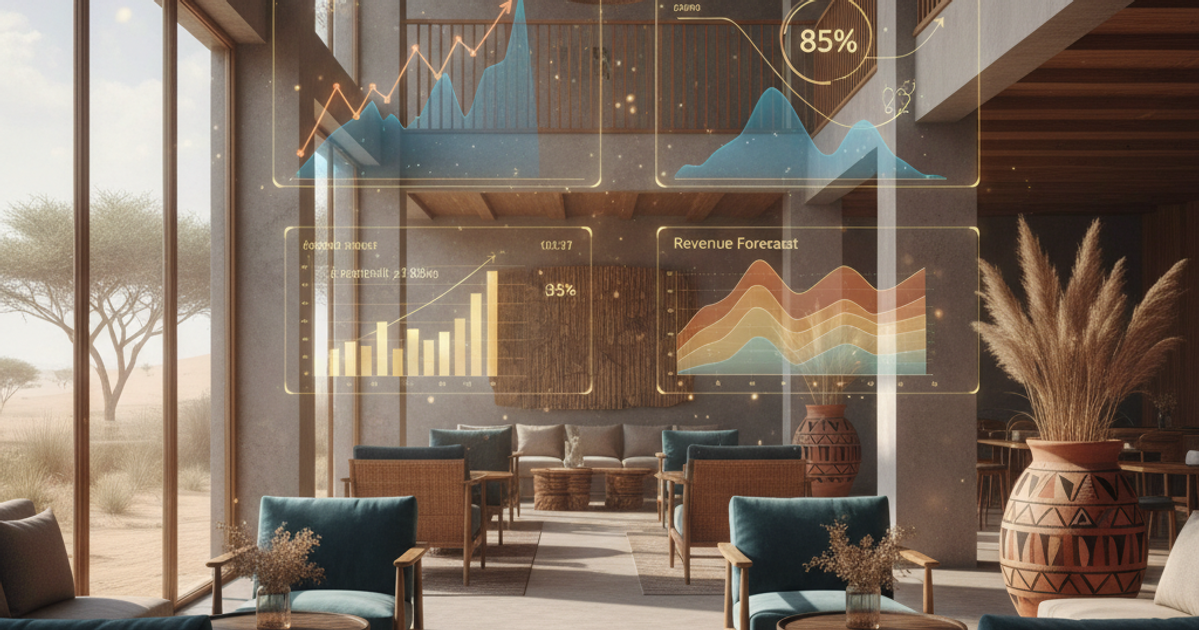
If you've ever been caught off guard by an empty hotel during what should have been peak season — or scrambled to accommodate a sudden surge of guests — you already know the cost of poor demand forecasting. For hotels across Africa, where tourism patterns are shaped by everything from wildebeest migrations to continental summits, getting demand forecasting right isn't just helpful. It's essential.
The good news? Artificial intelligence is making accurate demand forecasting accessible to hotels of every size, from boutique lodges in the Maasai Mara to business hotels in Lagos and Cape Town.
Why Traditional Forecasting Falls Short in African Hospitality
Traditional demand forecasting relies heavily on historical booking data and simple trend analysis. While this approach works reasonably well in mature, stable markets, it struggles in Africa's dynamic hospitality landscape for several reasons:
- Seasonal volatility: Tourism seasons in Africa don't follow neat patterns. A drought can shift safari bookings by months. Political events can redirect entire travel corridors overnight.
- Data scarcity: Many African hotels — especially independent properties — lack years of digitized booking history. Without robust data, spreadsheet-based forecasting is little more than guesswork.
- Multi-source demand: African hotels often serve a complex mix of leisure tourists, business travellers, conference attendees, and domestic guests, each with different booking behaviours.
- External disruptions: Currency fluctuations, visa policy changes, and airline route additions or cancellations can dramatically shift demand in ways that historical averages simply can't predict.
A 2025 study by the African Tourism Board found that hotels using manual forecasting methods experienced an average of 18% revenue leakage compared to properties using data-driven approaches. That's money left on the table every single month.
How AI-Powered Demand Forecasting Works for Hotels
AI demand forecasting goes beyond looking at last year's numbers. Modern systems analyse dozens of data signals simultaneously to predict future occupancy with far greater accuracy:
Internal data signals:
- Historical booking patterns and lead times
- Cancellation and no-show rates
- Guest segmentation (business vs. leisure, domestic vs. international)
- Length of stay trends
External data signals:
- Flight search volume and airline capacity to your destination
- Local and regional event calendars
- Weather forecasts and seasonal patterns
- Competitor pricing and availability
- Economic indicators and exchange rates
- Social media sentiment and travel trend data
The AI model continuously learns from new data, refining its predictions as conditions change. For an African hotel, this means the system can detect that a new direct flight route from Dubai to Nairobi will likely increase demand at Kenyan coastal resorts — and flag this weeks before the impact hits your booking engine.
Practical Applications: What Demand Forecasting Unlocks
Dynamic Pricing That Actually Works
The most immediate benefit of accurate demand forecasting is smarter pricing. When you know demand will spike in three weeks, you can gradually increase rates rather than reacting after rooms are already sold at lower prices.
RevenueIQ uses AI demand signals to recommend optimal pricing across room types and channels. Hotels using dynamic pricing powered by demand forecasting report 12-22% revenue increases compared to static rate strategies.
Consider this scenario: A Nairobi hotel traditionally drops rates in June, assuming low season. But AI forecasting detects an upcoming AU summit, increased corporate flight bookings, and rising hotel search volume for the city. Instead of discounting, the hotel holds or increases rates — capturing significantly more revenue per available room.
Staffing and Operational Efficiency
Demand forecasting isn't just about room revenue. When you can predict occupancy two to four weeks out with 85%+ accuracy, you can:
- Schedule housekeeping staff to match actual demand, reducing overtime costs
- Optimise food and beverage purchasing to minimise waste
- Plan maintenance during genuinely low-demand periods
- Allocate marketing spend to periods where it will have the most impact
For a 150-room hotel in Accra, better staffing alignment alone can save $3,000-5,000 per month — a significant amount in markets where margins are already tight.
Channel and Distribution Optimisation
Knowing when demand will be strong versus weak helps you decide where to sell your rooms. During high-demand periods, you can reduce allocation to OTAs (and their 15-25% commissions) and push direct bookings. During softer periods, you can strategically open up to wholesale and group channels to fill rooms.
Building a Demand Forecasting Strategy for Your Hotel
You don't need a massive technology budget to start benefiting from demand forecasting. Here's a practical roadmap:
Start With the Data You Have
Even if your historical data is limited, start collecting and organising it now. At minimum, track:
- Daily occupancy rates by room type
- Booking lead times (how far in advance guests book)
- Source of booking (direct, OTA, travel agent, corporate)
- Cancellation rates and patterns
- Average daily rate (ADR) and revenue per available room (RevPAR)
If you're using a Property Management System (PMS), most of this data is already being captured. The key is making it accessible for analysis.
Layer in External Data
Once your internal data foundation is solid, enrich it with external signals. Google Trends data for your destination, flight capacity data, and local event calendars are freely available and can dramatically improve forecast accuracy.
For Kenyan hotels, tracking flight bookings through Jomo Kenyatta International Airport has proven to be one of the strongest leading indicators of hotel demand — often predicting occupancy shifts 3-6 weeks in advance.
Adopt AI Tools Purpose-Built for Hospitality
Generic forecasting tools miss the nuances of hotel demand. Purpose-built hospitality AI solutions understand concepts like booking windows, length of stay patterns, rate parity, and channel dynamics.
RevenueIQ was built specifically for African hospitality businesses, accounting for the unique demand patterns, data challenges, and market dynamics that global tools often overlook.
Combine AI With Human Expertise
The best forecasting systems combine AI predictions with local market knowledge. Your revenue manager knows that the road to your resort is about to be upgraded, or that a competitor is closing for renovations. Feed these insights into the system to improve its predictions.
AI handles the data processing and pattern recognition at scale. Humans provide the contextual intelligence that no algorithm can replicate.
Measuring Success: Key Metrics to Track
Once you implement demand forecasting, track these metrics to measure its impact:
- Forecast accuracy: Compare predicted vs. actual occupancy. Aim for 85%+ accuracy at the 14-day horizon.
- RevPAR growth: Revenue per available room should increase as you price more effectively.
- Revenue leakage reduction: Track the gap between optimal and actual revenue.
- Operational cost savings: Monitor staffing costs, F&B waste, and energy costs against occupancy.
Hotels that commit to data-driven demand forecasting typically see measurable RevPAR improvements within 90 days of implementation.
The Competitive Advantage of Early Adoption
Across Africa, fewer than 15% of hotels currently use AI-powered demand forecasting. This means early adopters have a significant competitive advantage — they're pricing smarter, operating leaner, and capturing revenue that their competitors are leaving behind.
As the African hospitality market continues to grow (projected 7.2% annual growth through 2030, according to the World Tourism Organization), the hotels that invest in demand intelligence now will be the ones best positioned to capture that growth.
Guest Feedback as a Demand Signal
One often-overlooked input for demand forecasting is guest feedback and sentiment. When review sentiment starts trending upward, it's often a leading indicator of increased demand as positive word-of-mouth drives bookings. Conversely, declining sentiment can predict softening demand before it shows up in your booking data.
Maoni helps hotels capture and analyse guest feedback in real-time, turning qualitative sentiment into quantifiable demand signals that feed directly into your forecasting models.
Ready to Forecast Smarter?
Demand forecasting doesn't have to be complex or expensive. Whether you're running a 20-room guesthouse in Kigali or a 300-room resort in Zanzibar, AI-powered forecasting tools are now accessible and affordable enough to deliver real ROI.
The question isn't whether you can afford to invest in demand forecasting. It's whether you can afford not to — while your competitors figure it out first.
Book a demo to see how RevenueIQ's demand forecasting can help your hotel predict demand, optimise pricing, and grow revenue — built specifically for the African hospitality market.
Ready to transform your business?
See how Edrene Technologies can help you make smarter decisions with AI.
Request Demo